
The art of strategy is pitting your strengths against the enemy’s weaknesses. Make them play your game rather than you playing theirs.
Which is why sending U.S. troops to seize Iranian territory is a bad idea. It would throw away America’s advantages in technology and resources, while allowing Iran’s rulers to fight the war on their terms.
The disappointment felt by the Trump administration is understandable. Despite five weeks of intensive U.S. and Israeli bombing, Tehran still won’t make peace on terms acceptable to Washington.
Wars tend to escalate not because of strategy, but because of frustration. If airstrikes don’t compel the enemy to surrender, then the next rung on the ladder of violence is to put boots on the ground.
At the least, it might serve as leverage in negotiations, and signal your determination to win the war – or so the theory goes. Similar thinking led the U.S. to move from providing advisers and air support to South Vietnam, to ultimately committing more than 3 million troops.
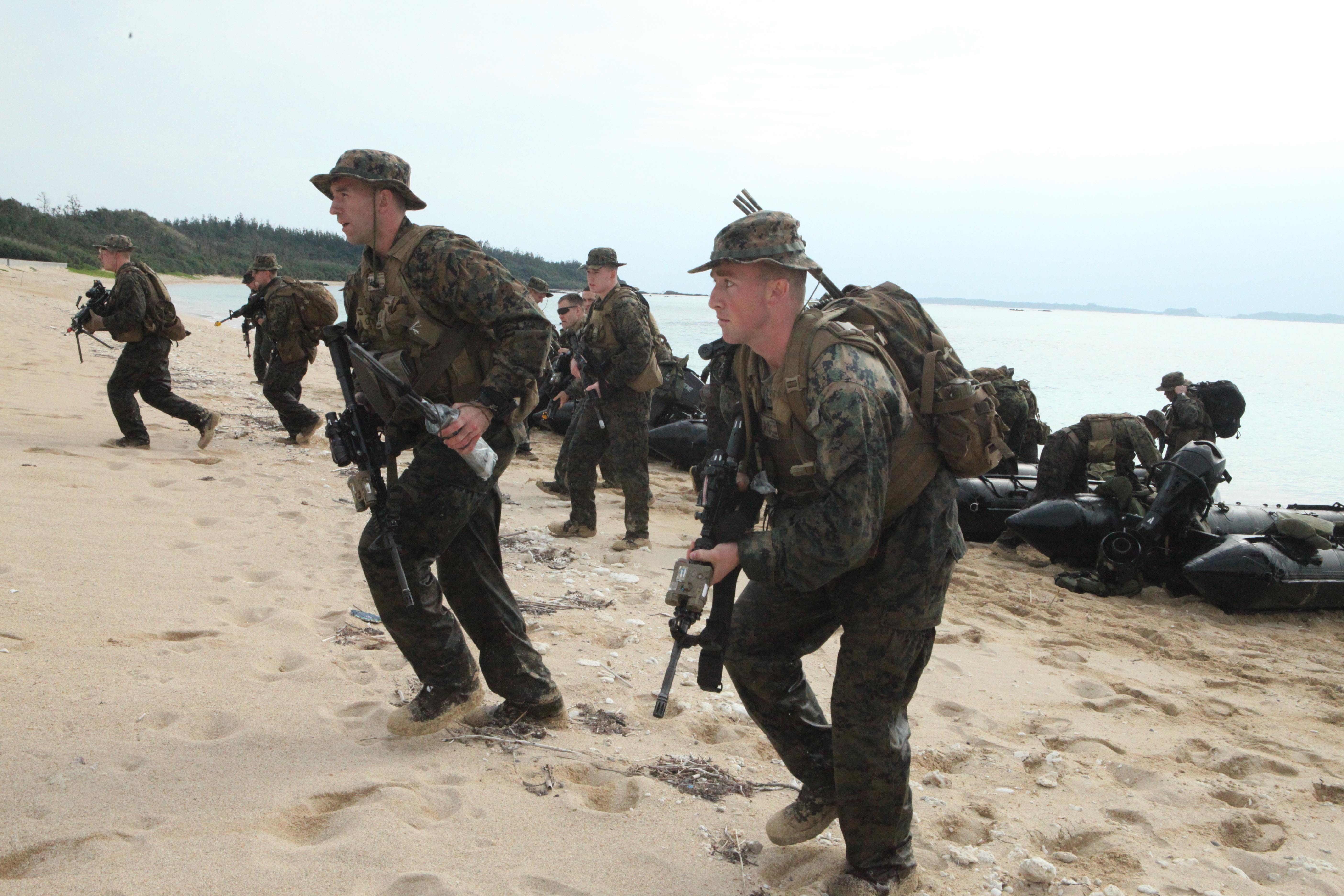
Whether Trump is serious or bluffing about a ground war remains to be seen. He predicts the war will end in a few weeks. But he has also spoken of seizing Kharg Island – through which most of Iran’s oil is exported – and has sent 3,000 paratroopers from the 82nd Airborne Division as two battalion-sized Marine Expeditionary Units to the Persian Gulf.
If the U.S. is going to escalate from airpower to boots on the ground, than the question is what a ground war would accomplish that the air war can’t. Iran has already lost much of its senior political and military leadership, as well as many of its missile launchers, weapons factories, warships, and nuclear sites.
If aerial bombardment – as well as decades of sanctions that have devastated Iran’s economy – won’t sway the Iranian regime, will a few thousand troops really make a difference?
As critics –myself included – have argued bombing alone is unlikely to compel Iran into “unconditional surrender,” as Trump initially demanded. But what bombing can do is leverage America’s strengths against Iranian weaknesses.
The fact is that the U.S. and Israeli air forces can bomb Iran at will. The U.S. has struck over 8,000 targets, and Israel has dropped over 16,000 bombs and missiles. With their air defenses smashed, Iran’s rulers become like Snoopy shaking his fist at the Red Baron.
What is also remarkable is that no American or Israeli aircraft have been shot down. No captured pilots paraded before Iranian television cameras or forced to “confess” to war crimes.
Just a handful of planes have been lost due to collisions, a “friendly” but trigger-happy Kuwaiti pilot, and Iranian drone strikes on airbases. Embarrassing as these losses are, they are nothing compared to the 8,000 bombers and 26,000 aircrew lost in the bombing campaign against Germany in World War II. Or the more than 900 aircraft and 1,000 aircrew lost over North Vietnam during Operation Rolling Thunder.
But a ground war would be far bloodier. Compared to being helplessly pounded from the air, the Iranian regime and the Islamic Revolutionary Guard Corps would love nothing more than to fight the U.S. on the ground.
If the U.S. seizes Kharg Island, American troops would be just 25 miles from the Iranian mainland. They would be vulnerable to IEDs, rockets, drones, long-range artillery, snipers, and commando raids. The garrison would need to be resupplied, reinforced and rotated, which would require a constant stream of cargo vessels and aircraft that would be at risk from Iranian mines and aircraft.
This isn’t to blow the trumpet for an air war. Bombing hasn’t defeated Iran, nor was it ever likely to. But airpower does play to America’s advantages in technology and resources. A ground war of attrition plays to Iran’s advantage, which is the regime’s total indifference to how many of its own soldiers are “martyred” in the fight against “the Great Satan.”
Ultimately, the issue isn’t whether bombs or boots are better. It’s that there is no good military option to deal with an Iranian regime that has declared war on its own people. A government that would cheerfully massacre 30,000 protestors rather than give up the right to build ballistic missiles, stockpile weapons-grade uranium, and support proxies that terrorize the Middle East.
If there is no perfect strategy, than the best option is the least costly one. Aircraft are expensive, but they are fast, flexible, and don’t have targets waiting to be picked off on Iran’s doorstep.
An air campaign may not win the war. But it is much less costly – financially or politically – as putting American boots on the ground.