
China and Russia aren’t sure that the Golden Dome missile system will actually work.
Yet they are not willing to take the risk that it does. Fearing that that an effective U.S. strategic missile defense system could be a prelude to a first strike, Beijing and Moscow may beef up their own nuclear forces, according to an analysis by American experts.
Because of “the perceived political signal Golden Dome is sending and the vagueness surrounding the program, it may influence Chinese and Russian force structure and posture even before the program matures with technical details, and regardless of whether the United States continues the program after Trump,” wrote Raymond Wang and Lachlan MacKenzie for the Center for Strategic and International Studies in Washington, D.C.
Wang and MacKenzie analyzed Chinese and Russian reactions to Golden Dome, including government officials, think tanks and media. Those reactions indicate a belief that the Trump administration has gone far beyond the limited missile defense systems of the Obama and Biden administrations, which were designed to stop a small number of ICBMs from nations such as North Korea. Instead, the worry is that the U.S. is seeking comprehensive missile defense of the United States against a full-scale ICBM strike. One Chinese arms control expert claimed that “Golden Dome explicitly targets Russia and China for the first time, indicating a new degree of hostility,” according to CSIS.
Yet despite their apprehension, Chinese and Russian experts question whether Golden Dome would actually work, that the U.S. defense industry is capable of building it, and that the American economy could afford a multi-trillion dollar program. One Chinese journal pointed to a “deficient U.S. industrial base and ongoing difficulties with the Next Generation Interceptor program, speculating that Golden Dome is likely to run into delays and challenges with systems integration,” CSIS noted. “Another Chinese publication predicted that “Golden Dome programs are likely to have cost overruns, which will be difficult given the United States’ debt levels.”
Russian analysts voiced similar sentiments, with one arguing that success depends upon “the United States’ ability to sustain growing its national debt and the MAGA movement’s continued political success, neither of which is guaranteed.”
Moscow is also betting that Putin’s “wonder weapons” will deter an America emboldened by Golden Dome. “Russian analysts argue that Russia’s existing novel nuclear delivery systems—particularly the Burevestnik nuclear-powered cruise missile and Poseidon long-range torpedo—ensure that Russia will be able to penetrate any future U.S. defenses,” CSIS wrote.
Skepticism about Golden Dome is hardly confined to America’s adversaries. Many American experts question the effectiveness of a missile defense system that could cost trillions, and is so ambitious that it aims to destroy not just ICBMs, but also cruise and hypersonic missiles.
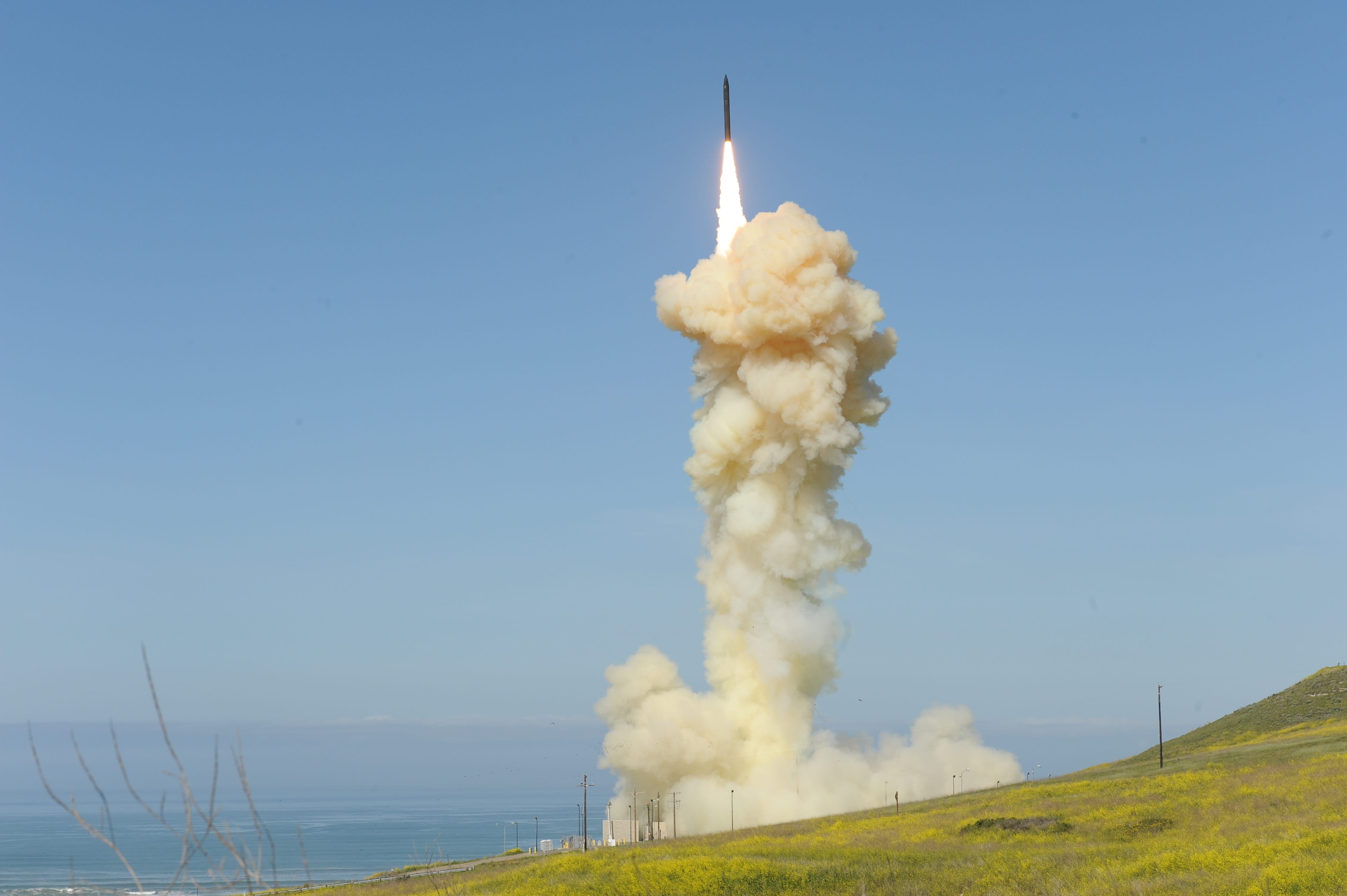
The current Ground-Based Midcourse Defense (GMD) system comprises 44 interceptors in Alaska and California, which arguably could stop a handful of ICBMs fired by a rogue nation like North Korea. Golden Dome aims to protect the continental United States from massive nuclear attack, by using a variety of untested technologies, including constellations of space-based interceptors to destroy missiles inside the atmosphere during boost-phase ascent.
Ultimately, the biggest question with Golden Dome isn’t technology, but rather how China and Russia will respond. Both nations fear that America could launch a first strike and then rely on Golden Dome to repel a retaliatory second strike.
Whether this is a rational fear, given Russia’s 5,500 nuclear warheads and China’s growing number of ICBMs, isn’t the point. The obvious countermeasure to an adversary’s missile defense system is to simply build more missiles of your own and overwhelm the defender.
“While experts in Russia and China doubt Golden Dome’s feasibility, it is likely both countries will hedge their bets by developing countermeasures,” MacKenzie told Uncommon Defense. In the 1980s, the Reagan administration’s Strategic Defense Initiative was countered by new Soviet missiles and anti-satellite weapons. In 2002, U.S. withdrawal from the Anti-Ballistic Missile Treaty – work on a limited missile defense system – spurred Moscow to develop powerful – or zany – weapons such as nuclear-powered cruise missiles and thermonuclear torpedoes that create tidal waves.
“Russian analysts have suggested that similar asymmetric countermeasures, including novel systems and anti-satellite weapons, are the best approach for countering Golden Dome,” according to CSIS.
China’s response is less clear. “Chinese analysts have thus far been quite vague about how China should respond to Golden Dome,” CSIS noted. Some favor pursuing arms control talks, while others want China to increase its nuclear deterrent.
This suggests that China will continue to expand its nuclear forces to guarantee a second-strike capability. “Indeed, China will likely see Golden Dome as a vindication, rather than an effect, of its decision to build up,” CSIS said. Beijing will also “focus on perceived areas of advantage, specifically hypersonics, which Chinese analysts acknowledge pose a challenge to the current U.S. missile defenses. China will also invest in other preexisting systems that help address its concerns with missile defense, such as the Fractional Orbital Bombardment System.”
It’s possible that Trump’s successors will cancel Golden Dome because of cost or feasibility. If the program proceeds, the U.S. will need to balance the desire to protect itself against nuclear attack versus rattling Chinese and Russian fingers on the nuclear trigger.
One way to reassure Beijing and Moscow is to focus Golden Dome on “defending a limited number of high value sites, such as major population centers, key infrastructure and military facilities, against non-strategic weapons, rather than defending the entire homeland against all types of threats,” MacKenzie suggests. “A narrower approach could also eliminate the need for space-based interceptors, which Moscow and Beijing have singled out as particularly destabilizing.”
On the other hand, even if Golden Dome were scrapped or downsized, this still might not reassure China and Russia that America isn’t seeking nuclear hegemony. The missile defense genie can’t be put back inside the bottle.