
From sticks and stones to tanks and drones, the art of war changes over time.
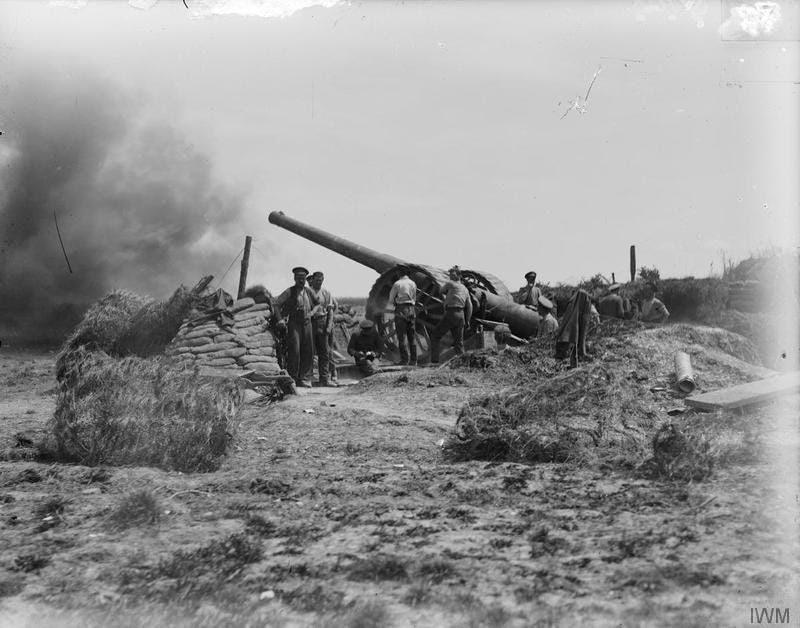
Case in point: the Battle of the Somme. On July 1, 1916, British commanders hurled masses of infantry – advancing shoulder-to-shoulder – against German machine guns, barbed wire and artillery. The cost was nearly 60,000 British casualties in a single day. The gain was just three square miles of territory captured.
Seared by that experience and determined not to repeat it, armies invented the tank and the airplane to break the trench deadlock. To any Western nation today, the idea of sending soldiers into a meatgrinder like the Somme would be unthinkable.
Yet almost 120 years after a battle that has become a symbol of military stupidity, Russia isn’t just repeating the mistakes of the Somme. It’s actually setting the art of war backwards.
During the five-month Somme campaign, the British only managed to advance an average of 87 yards per day. During Russia’s 18-month effort to capture the Ukrainian city of Pokrovsk, Russian troops have only advanced an average of 77 yards per day, according to an analysis by the Center for Strategic and International Studies, a Washington think tank.
“This is slower than the most brutal offensive campaigns over the last century, including the notoriously bloody Battle of the Somme during World War I,” CSIS noted.
Comparisons with other historical battles are even less flattering to Russia. At the Battle of Kursk in July 1943, where the Germans had to breach elaborate Soviet defenses that included a million land mines, the daily rate of advance was 3,600 yards, CSIS said. Most embarrassing, Ukraine’s counteroffensive at Kharkiv in September 2022 advanced an average of 8,100 yards per day.
Despite intense bombardment by drones, artillery and glide bombs, Russia hasn’t even managed to capture all of Pokrovsk. It has succeeded in taking 20 percent of Ukrainian territory, or about 46,000 square miles.
The price has been an estimated 1.2 million casualties between February 2022 and December 2025, including 325,000 killed. That doesn’t look so bad compared to the 7 million casualties suffered by Imperial Russia in World War I, or the approximately 11 million military casualties suffered by the Soviet Union in World War II.
But again, the comparisons are damning. The Tsar’s army went to war in 1914 without enough rifles or food, while the Red Army had to contend with Hitler’s lethally efficient war machine. On paper at least, Russia should have defeated Ukraine.
To some extent, Russia’s poor battlefield performance can be blamed on the advent of drone warfare. Masses of drones so dominate the Ukraine war that tanks have been largely chased off the battlefield, and infantry stays in trenches and bunkers for fear of being picked off by explosive-laded quadcopters. Maneuver warfare becomes impossible, and without maneuver, there can only be a war of attrition.
Yet in many ways, the armies at the Somme faced the same situation. The image of First World War generals as being stupid, callous and unimaginative isn’t without merit, but neither is it totally fair. Nations went to war in 1914 expecting a Napoleonic-style war of sweeping maneuvers and glorious victories. Instead, they soon confronted elaborate defensive systems of trenches, machine guns, artillery and barbed wire. What was lacking was a means to crack them.
At first, commanders like Britain’s General Douglas Haig tried to blast their way into a breakthrough. Before the Somme offensive, the British hammered German positions with a week-long bombardment that used up nearly 2 million shells. At the Battle of Verdun in 1916, the German plan was to mass 1,200 guns in an attempt to seize the city, and then bleed the French Army dry when it counterattacked. The cost was more than a million Allied and German casualties at the Somme, and almost as many at Verdun. Despite the carnage, the frontlines had barely moved.
But change eventually came. Within four years after World War I began, both sides had devised ways to break the trench stalemate. Lacking the industrial resources of the Allies, the Germans created highly trained stosstruppen (“storm trooper”) units to infiltrate and encircle Allied defenses. In 1918, these tactics came close to defeating the Allied armies and winning the war.
For their part, the Allies chose mechanization: tanks that could cross bullet-swept No Man’s Land, pulverize German barbed wire and machine gun nests, and let the “poor bloody infantry” seize ground at acceptable cost. These tactics devastated the German Army and compelled Berlin to seek an armistice by November 1918.
It is now four years since Russia invaded Ukraine. It would be incorrect to say that Russia hasn’t innovated. But those innovations seem to belong to a different, almost pre-mechanized era. With most of its prewar arsenal of 14,000 armored vehicles destroyed, Russian tactics now rely on infantry backed by massive numbers of drones and other firepower.
Assaults are made by small teams of poorly trained and equipped infantry. Some are convicts freed from prison in return for fighting; others attack while riding unarmored motorcycles. These suicide troops advance until they are shot by Ukrainian troops, who thus reveal their position to Russian drones and artillery.
It’s not that these tactics are ineffective. Ukraine’s army is being worn down. But Russia is being worn down as well, including by an economy that is beginning to crack under the strain.
The question is whether the attritional warfare of Ukraine is an inevitable byproduct of 21st Century weapons such as drones. Perhaps new technology, such as lasers mounted on tanks, may at least partly mitigate the drone threat.
But the lesson of the Somme is that mindsets have to change as well. Russian losses in Ukraine can’t just be blamed on drones. Russian generals – and their leaders, such as Putin – don’t care about the lives of their soldiers. That is something the veterans of the Somme would understand.