
The U.S. and Israel could run out of some types of missiles by next month, according to a new report.
This list includes Patriot air defense missiles, Israeli Arrow missile interceptors, U.S. ATACMS and PrSM ballistic missiles, as well as propellant and explosives, warned the analysis published by the Royal United Services Institute, a British think tank.
The U.S. and its allies launched more than 11,000 missiles and smart bombs in 16 days, a rate of expenditure that cannot be sustained. “While American and Israeli forces achieve some tactical success by striking thousands of targets, the wider coalition is also downing drones and intercepting missiles by expending multi-million-dollar missiles that cost a fraction of the price,” said the report, which used data compiled by the Payne Institute – a U.S.-based public policy research organization – to examine inventories as well as manufacturing and supply chains.
Ultimately, “battlefield dominance matters less than the industrial capacity to replenish critical stockpiles,” the report said.
Concerns over insufficient numbers of expensive guided munitions aren’t new. Since Russia’s invasion of Ukraine in 2022, supplying offensive and defensive missiles to Ukraine has depleted NATO arsenals.
That the Iran War is exacerbating this problem is already well known. But what is shocking is how many weapons inventories are close to exhaustion. The RUSI report predicted depletion dates for 34 weapons, including ballistic and cruise missiles, air-to-ground and air-to-air missiles, GPS-guided bombs, and air defense weapons.
For example, at the present rate of consumption, Israel’s Arrow 2 and 3 interceptors will be gone by the end of March. Patriot and THAAD missile interceptors will be depleted in April, as well as U.S. ATACMS and PrSM ballistic missiles, and Israeli Rampage, Delilah and Popeye Turbo strike missiles.
In May through August, there could be shortfalls of U.S. SM and Israeli Tamir Iron Dome interceptors, Tomahawk cruise missiles and Israel’s inventory of JDAM smart bombs, as well as French MICA air-to-air missiles and Qatar’s Aster air defense rockets. On the other hand, U.S. stockpiles of JDAMs, HIMARS rockets and AIM-120 and AIM-9X appear to be sufficient for several years.
The obvious solution is simply to produce more missiles. During World War II, the combatants were able to mobilize their economies to churn out staggering amounts of weapons, including 300,000 tanks and 800,000 aircraft, with America producing alone producing 300,000 planes.
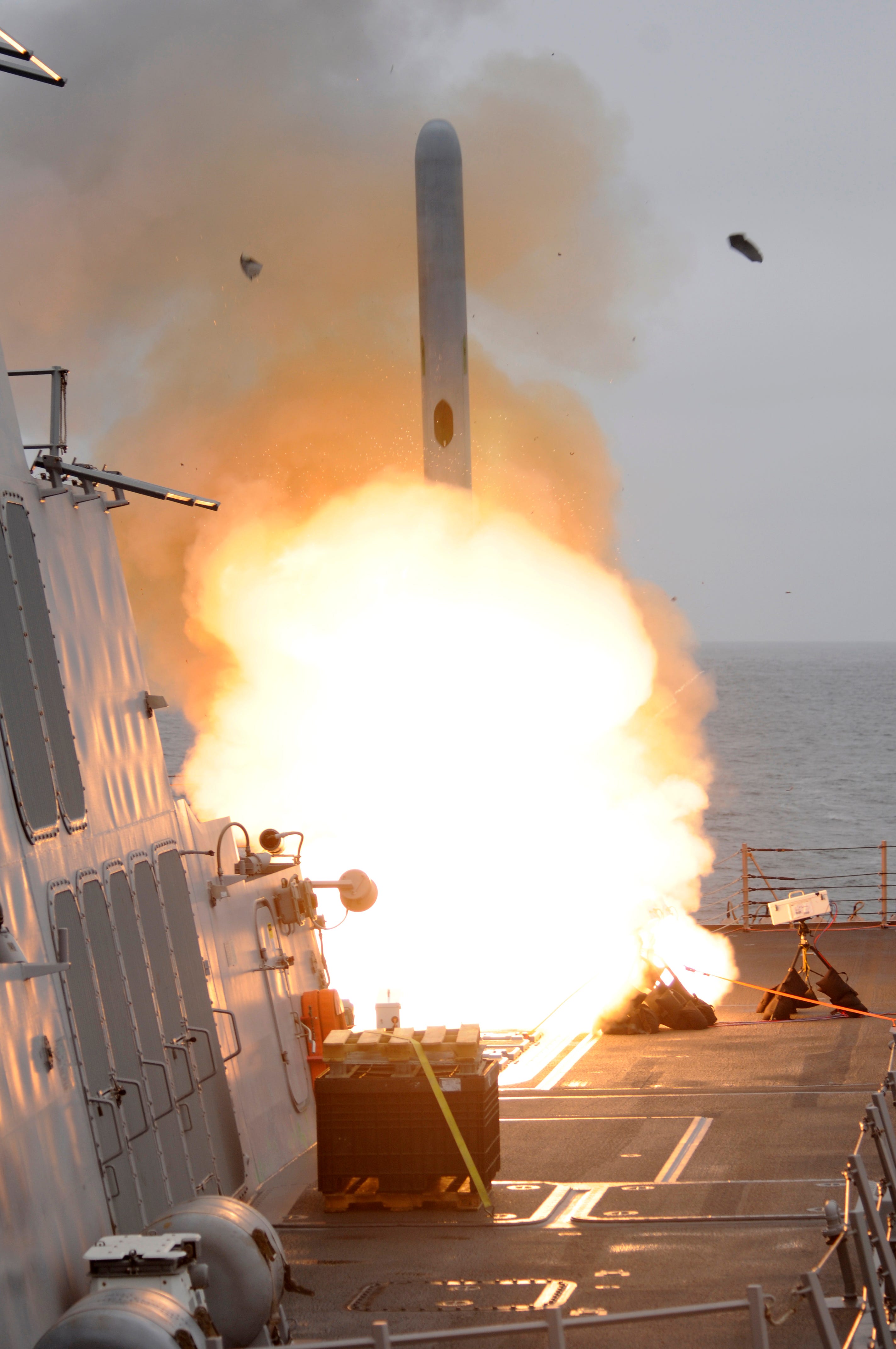
But ramping up production of guided missiles, many of which require special electronics and raw materials, is another matter. In the first six days of the Iran War, the U.S. fired 319 Tomahawks, according to an estimate by the Center for Strategic and International Studies, a U.S. think tank. Yet America only produces about 100 Tomahawks per year, though there are plans to increase that rate to 1,000 per year.
However, that’s easier said than done, given that guided weapons often need specialized components and raw materials. Many of these come from China, which is not inclined to help the West rebuild its arsenal.
“While the defense industrial base is producing most of these munitions at present, they are incredibly complex and difficult to surge, meaning it will likely take at least 5 years to replenish the 500-plus Tomahawk missiles already fired in the war,” the RUSI report noted. “Worse, sourcing critical defense minerals, rare earths, and materials to make the weapons and munitions is complicated by China.”
It’s not just missiles that are in short supply. Air defense cannon, such as the U.S. C-RAM Gatling gun, are cheaper and simpler than missiles, but they also consume vast quantities of raw materials. “The cheap-defeat layer alone consumed almost 29,000 kilograms of propellant and over 10,000 kilograms of explosives,” said the report. The result is that “C-RAM ammunition is competing upstream with Tomahawk, JASSM, and Patriot for the same energetic base. The acquisition system separates missiles from ammunition, but the supply chain does not.”
This has implications far beyond the Iran War. If the U.S. and its allies lack sufficient munitions to fight Iran for more than a few weeks, they won’t have enough to simultaneously supply Ukraine, deter China from invading Taiwan, and replenish their own armed forces.
“In a salvo-based environment, where ‘missile math’ governs the intensity of warfighting, the decisive advantage shifts to the actor that can sustain its defensive economy and replenish its most critical assets,” the report concluded. “Operation Epic Fury is the first test of this new reality, and its initial results are a stark warning.”
If so, then this points to a future where nations must maintain huge inventories of missiles, and have the capacity to rapidly manufacture more. This will put a premium on cheaper weapons designed for mass production.
Yet this also suggests that future conflicts will be battles of attrition waged between rival fleets of offensive and defensive missiles, in a rocket-propelled equivalent of trench warfare. This won’t make war less likely¾but it will make it grimmer.